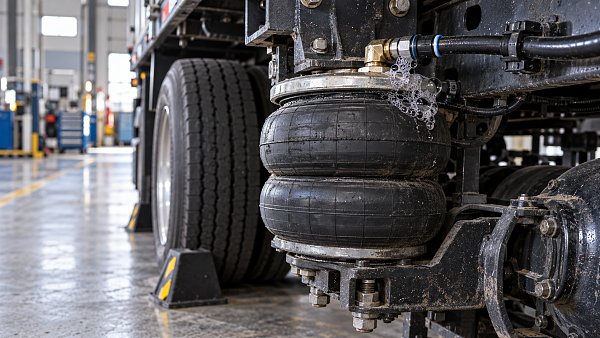
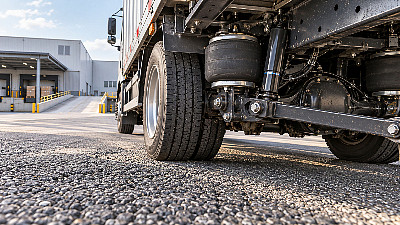
Why Are My Converter Dolly Brakes Overheating?
Converter dolly brakes overheat when they remain partly applied after release, absorb more braking energy than intended, or develop excessive friction at one wheel end. Dragging brakes, trapped application pressure, seized components, and poor brake balance across the combination are the main possibilities. Heavy loads and long descents increase heat, but repeated overheating on ordinary routes points toward a fault that needs investigation.
The most useful distinction is whether the heat affects one wheel, the entire dolly, or several axles throughout the combination. That pattern helps separate a local mechanical problem from an air-control fault or excessive braking demand. Smoke, a strong burning smell, pulling, or reduced braking performance requires stopping somewhere safe and having the equipment assessed before travel continues.
Compare the heat pattern before replacing parts
A hot brake identifies where energy is being converted into heat; it does not automatically identify the defective component. A correctly functioning dolly brake can overheat if other brakes contribute too little. Conversely, one dragging brake can become extremely hot even when the combination has performed very little service braking.
These patterns guide diagnosis rather than prove a cause. A shared air problem can reveal itself first at the tighter brake, while a local fault can become noticeable only on a demanding descent.
Dragging brakes versus brakes doing too much work
Mechanical drag continues after the application ends
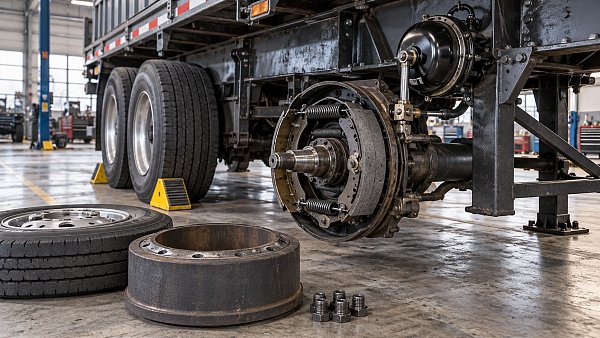
With drum brakes, release depends on the shoes, return springs, camshaft, rollers, pivots, and actuator linkage moving correctly. Corrosion, damaged hardware, worn camshaft bushings, or a binding slack adjuster can prevent full return. Excessively tight adjustment or incorrect assembly can leave the lining contacting the drum.
Air disc brakes have a different set of likely binding points: caliper guides, tappets, the adjustment mechanism, and pad movement within the carrier. Torn protective boots and corrosion deserve attention because contamination can restrict movement. Replacing pads alone leaves the underlying problem unresolved when the caliper cannot release properly.
A qualified workshop can assess wheel rotation and component movement with the dolly safely supported and the combination secured. Some light contact is characteristic of certain brake designs, so free rotation must be judged against the manufacturer’s procedure. An unloaded wheel spinning acceptably also does not rule out binding that develops as components warm and expand.
Excessive braking contribution produces heat during applications
If the dolly brakes release correctly but overheat during repeated stops, investigate how braking effort is distributed. Weak tractor or trailer brakes can shift more work onto the dolly. Differences in friction material, actuator specification, adjustment, or control response can also make one part of the combination brake more aggressively.
This distinction changes the repair. Correcting a seized component addresses drag; replacing that same component will not solve a combination in which several other brakes are underperforming. A brake-performance assessment across the connected equipment is more informative than inspecting the dolly in isolation.
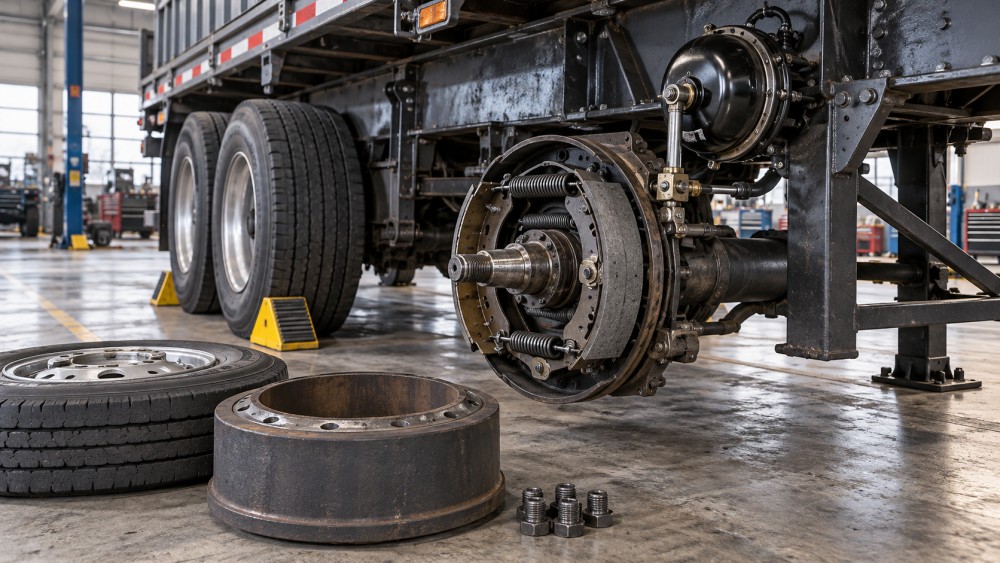
Air reaches the brakes, but does it release completely?
A normal supply-pressure reading does not establish that the service brakes have released. The relevant question is whether pressure at the service chambers falls as intended after the brake command ends. A restriction or valve fault can retain application pressure even while the tractor’s dashboard gauges look normal.
Possible causes include internally damaged hoses, obstructed exhaust passages, contaminated valves, and incorrectly connected plumbing. A hose can appear sound externally while its inner lining restricts airflow. Release that becomes progressively slower over repeated applications is especially useful evidence to record.
The dolly’s relay or emergency-control arrangement must be identified before testing. Converter dollies do not all use the same parking and emergency-brake configuration. Where spring brakes are fitted, insufficient release pressure or a fault in the release circuit can leave spring force partly applied. Other arrangements require different diagnostic procedures; assuming every dolly behaves like a familiar semitrailer can lead to the wrong conclusion.
Pressure measurements at appropriate test points help distinguish retained air pressure from mechanical binding. If service pressure returns correctly but the brake remains applied, attention shifts toward the actuator and foundation brake. If pressure remains, the investigation moves upstream through the relevant hoses, valves, and control connections.
Opening lines or altering connections on a loaded combination is not an appropriate roadside experiment. Stored air, vehicle movement, and spring-brake forces require controlled workshop procedures. Manually backing off an adjuster to make the wheel turn can also conceal the fault and leave inadequate braking capacity.
Long descents expose both thermal limits and brake imbalance
Descending converts the combination’s potential energy into heat through the service brakes and any available auxiliary braking system. Higher mass, greater speed, and a longer descent increase the energy that must be managed. Repeated light pedal pressure can keep friction surfaces hot because there is little opportunity for cooling between applications.
A descent-related event should be assessed against the actual operating sequence: entry speed, selected gear, auxiliary-brake use, brake-application duration, and whether the equipment had already accumulated heat. Slowing before the descent and using the vehicle’s specified descent-control technique reduces sustained service-brake demand.
Auxiliary braking changes where energy is absorbed. An engine brake or retarder acts through the powered vehicle’s driveline, while service braking distributes effort through the combination’s brake system. The appropriate balance depends on vehicle configuration, available traction, and manufacturer instructions. Maximum auxiliary braking is not a universal answer on low-grip surfaces.
Heat that appears only on a severe descent still warrants inspection if the dolly is disproportionately hot. Underperforming brakes elsewhere, incorrect component matching, or delayed application and release can concentrate thermal load. Route severity and a technical defect can exist together.
Temperature readings need a consistent comparison
There is no single external temperature reading that diagnoses every converter dolly brake. Drum and disc designs, measurement location, elapsed time after stopping, ambient conditions, and recent braking all affect the result. Published operating limits must come from the applicable component documentation.
An infrared thermometer is useful for comparing equivalent points on similar wheel ends shortly after the same operating event. Shiny metal, different surface finishes, restricted sightlines, and inconsistent measuring distance can distort readings. A drum’s outer surface and an exposed disc surface are not directly equivalent measurement locations.
Record the location and timing alongside the reading. A temperature taken immediately after stopping cannot be compared reliably with one taken after a long cooling period. Opposite sides of the same axle provide a useful reference, although sunlight, road spray, and differing airflow can introduce variation.
Do not touch components to judge temperature or crawl beneath a hot, unsecured dolly. Applying water to hot friction components can cause thermal shock and create a scalding hazard. If smoke or fire is present, keep clear and use the appropriate emergency response.
A hot hub can point beyond the brake
Wheel-bearing friction can resemble brake overheating from outside the vehicle. Incorrect bearing adjustment, lubricant loss, contamination, or bearing damage can heat the hub and surrounding components. Brake heat also travels into the hub, so the location of the hottest accessible surface is only a clue.
Inspection should connect the temperature pattern with lubricant condition, leakage, bearing condition, and brake release. Replacing friction material without assessing a hot hub risks leaving a separate wheel-end problem in service.
Recent repairs can explain a sudden change
When overheating begins immediately after brake work, the installed parts and assembly deserve early attention. Relevant details include chamber type and size, slack-adjuster geometry where applicable, friction-material specification, return hardware, and drum or rotor condition. A part that physically fits is not necessarily suitable for the axle and brake configuration.
Automatic slack adjusters require correct installation and a functioning foundation brake. Repeated manual adjustment to address excessive stroke or heat can hide a developing fault. The reason adjustment is being lost must be established using the specified inspection procedure.
New linings or pads also require the applicable bedding procedure. Initial contact patterns change as the surfaces mate, but severe heat, smoke, or persistent drag should not be dismissed as bedding. Contaminated friction material, an unsuitable drum surface, or a binding mechanism will not become acceptable through continued operation.
Air-line routing matters after repairs as well. A kinked hose, a line positioned against a moving component, or a connection made to the wrong port can change brake response. Comparing the finished installation with the correct schematic is more reliable than relying on how another dolly is arranged.
Confirm the cause before returning the dolly to service
A useful workshop handover captures the conditions that separate the competing explanations:
- Identify the affected wheel ends and whether the heat followed a descent, repeated stops, or travel with minimal braking.
- Include recent brake, hub, hose, or valve work, especially if the symptom began immediately afterward.
- Describe slow release, pulling, unusual pedal response, warning indications, or changes when the dolly is connected to different equipment. A pattern tied to one tractor or trailer combination helps direct investigation toward system interaction.
- Where readings were taken safely, provide measurement locations and the time elapsed after stopping.
After the cause is corrected, the overheated components still need assessment. Heat can damage friction material, crack drums or rotors, and affect nearby seals or lubricant. Cooling restores neither damaged material nor reliable braking performance.
Repair verification should include release behavior, relevant pressure and stroke measurements, and a controlled performance assessment followed by comparable temperature observations. If the original symptom occurred only after repeated applications, one successful stationary release test is insufficient. The verification needs to reproduce the operating condition safely enough to establish that the fault has been resolved.
Send us a message
Related News
 Supply Chain & ProcurementMexico Truckers Agree to Federal Talks After Strike Across 19 StatesMexico truckers agree to federal talks after a strike across 19 states. Explore what negotiations mean for cargo security, freight costs and supply chain reliability.MORE+
 Supply Chain & ProcurementU.S. Trailer Orders Reach 42,700 in September as Fleets Prepare for 2027U.S. trailer orders hit 42,700 in September 2026 as fleets prepare for 2027. Explore what earlier buying and rising backlogs could signal for fleet purchasing and demand.MORE+
 Box SemitrailersACT Research: U.S. Trailer Orders Surge to 42,700 in September 2026ACT Research reportedly puts U.S. trailer orders at 42,700 in September 2026, with backlogs up 29%. Explore what the rebound could mean for fleet procurement and delivery planning.MORE+
 Box SemitrailersKnowles Logistics Orders 15 SDC Curtainsiders, Taking Trailer Fleet to 253Knowles Logistics orders 15 SDC EN XL curtainsiders, taking its trailer fleet to 253. Explore what the investment means for nationwide food and FMCG transport.MORE+
 Driver Assistance & SafetyGrote Unveils Next-Generation 4See Trailer Camera Using Standard Seven-Pin ConnectorExplore Grote’s next-generation 4See trailer camera, sending video through a standard J560 seven-pin connector without trailer rewiring. Discover key compatibility and installation considerations.MORE+
 Braking & Electronic ControlsWhy Are My Converter Dolly Brakes Overheating?Why are my converter dolly brakes overheating? Discover common causes, from dragging brakes to trapped air pressure, and learn what to check for safer, more reliable braking.MORE+
 Policy, Standards & ComplianceHow Do You Verify Queensland’s 2026 Road Train Axle Mass Limits?How do I verify the 2026 axle mass limits for a road train configuration in Queensland? Explore NHVR rules, permits and route checks with this practical guide to safer dispatch.MORE+
 Maintenance & TCOWhy Does My Diesel Truck Need Parked Regeneration on Short Routes?Why does my diesel truck keep requesting parked regeneration on short delivery runs? Discover how low exhaust heat, interrupted cycles, and DPF faults cause repeat warnings—and what to do next.MORE+
 Highway Truck TractorsHow Do You Check Fifth-Wheel Height Compatibility Before Buying a Trailer?How do I check fifth-wheel height compatibility before buying a semi-trailer? Compare coupling heights, load conditions, and clearances. Use this buying checklist to avoid costly mismatches.MORE+
 Flatbed & Lowbed SemitrailersIs Air Suspension Worth the Extra Cost for Steel-Coil Flatbeds?Is air suspension worth the extra cost on a flatbed trailer carrying steel coils? Compare ride quality, maintenance and lifetime costs to find the best value for your operation.MORE+
 Maintenance & TCORepair or Replace Commercial Trucks? Using Downtime and Cost per MileCommercial Trucks: repair or replace? Compare downtime, cost per mile, and future ownership costs to make smarter fleet decisions. Discover when repair pays and replacement wins.MORE+
 Medium-Duty Delivery TrucksSizing Commercial Trucks for Urban Delivery: Payload vs. Cargo VolumeSize Commercial Trucks for urban delivery with confidence. Compare payload, usable cargo volume, axle limits, and route access to choose the right fit and avoid costly extra trips.MORE+
 Highway Truck TractorsUsed Tractor Truck Inspection: Engine Hours, Fifth Wheel, and FrameBuying used Tractor Trucks? Learn how to verify engine hours, inspect fifth-wheel wear, and spot frame damage to avoid costly surprises and buy with confidence.MORE+
 Highway Truck TractorsTractor Truck Axle Ratios: Balancing Highway Fuel Use and Hill StartsTractor Trucks axle ratios affect fuel use and loaded hill starts. Learn how to compare gearing, verify launch capability, and choose a powertrain that fits your routes.MORE+
 Technology & Performance BenchmarkHow Semi-Trailer Axle Position Changes Kingpin Load and Axle WeightSemi-Trailers: Learn how axle position changes kingpin load and axle weight. Explore practical calculations to balance loads, avoid overloads, and choose the right setup.MORE+
 Box SemitrailersDry Van or Curtainsider? Choosing Semi-Trailers for Pallet FreightCompare Semi-Trailers for pallet freight: dry vans vs. curtainsiders. Discover which loading options, cargo protection, and operating costs best fit your routes before you buy.MORE+
 Full TrailersFull Trailer Coupling Checks: Drawbar Wear, Locking, and Safety ChainsFull Trailers need secure couplings for safer dispatch. Learn how to check drawbar wear, verify locking, and inspect safety chains to spot defects before they put your fleet at risk.MORE+
 Full TrailersWhat Is a Full Trailer? Axle Support, Drawbars, and Common UsesExplore how Full Trailers support loads, use drawbars, and compare with semitrailers. Discover common uses and key operating factors to choose the right setup for your freight needs.MORE+
 Refrigerated SemitrailersBuying Refrigerated Trailers for Multi-Temperature Food DeliveryBuying Refrigerated Trailers for multi-temperature food delivery? Compare layouts, cooling capacity, payload and lifetime costs to protect food quality and choose the right fit for your routes.MORE+
 Refrigerated SemitrailersRefrigerated Trailer Temperature Swings: Airflow or Unit Failure?Refrigerated Trailers showing temperature swings? Learn how to distinguish airflow issues from unit faults, protect cargo, and avoid costly repairs with practical diagnostic checks.MORE+
 Driver Assistance & SafetyFlatbed Trailer Load Securement: Preventing Steel Coil MovementFlatbed Trailers: Learn how to prevent steel coil movement with proper cradles, rated tiedowns, and load checks. Explore practical steps for safer, more confident dispatch.MORE+
 Flatbed & Lowbed SemitrailersSteel vs. Aluminum Flatbed Trailers: Payload Gains and Repair CostsCompare steel vs. aluminum Flatbed Trailers for usable payload gains, repair costs, and downtime. Discover which option delivers better value for your fleet.MORE+
 Routing & Capacity PlanningPlanning Lowboy Trailer Moves: Ground Clearance, Grades, and Site AccessPlanning moves with Lowboy Trailers? Learn how to assess ground clearance, grades, traction, and site access to avoid costly delays and keep equipment deliveries on track.MORE+
 Flatbed & Lowbed SemitrailersChoosing a Lowboy Trailer for Excavators: Deck Height and Load CapacityCompare Lowboy Trailers for excavators with expert guidance on deck height, load capacity, and axle limits. Find the right fit to avoid costly mismatches and plan your next move.MORE+
 Maintenance & TCOWhen Do Electric Trucks Pay Off? A Depot-Based Fleet TCO AnalysisWhen do Electric Trucks pay off? Explore depot-based fleet TCO, charging costs, and break-even factors to identify profitable routes and invest with confidence.MORE+
 Electric Heavy TrucksCan Electric Trucks Complete Your Routes? Payload, Range, and ChargingCan Electric Trucks handle your routes? Learn how payload, real-world range, and charging windows affect fleet performance—and discover what to check before you invest.MORE+
 Policy, Standards & ComplianceFMVSS 121 for Truck Air Brakes: Stopping Distance and Test RequirementsCommercial Vehicle Braking Systems: Understand FMVSS 121 stopping distances, test conditions, and compliance evidence to compare truck air brakes and make smarter fleet decisions.MORE+
 Braking & Electronic ControlsTruck Air Brake Fade on Long Descents: Causes and PreventionCommercial Vehicle Braking Systems can lose stopping power on long descents. Learn brake fade causes, warning signs, and prevention strategies to keep your truck under control.MORE+
 Axles & SuspensionWhy Truck Air Suspension Sags Overnight: Leak Diagnosis and RepairCommercial Vehicle Suspension Systems sagging overnight? Learn to pinpoint air leaks, identify valve faults, and verify repairs before replacing costly parts. Get the diagnostic guide.MORE+
 Axles & SuspensionAir vs. Leaf Spring Suspension for Trucks on Rough Delivery RoutesCommercial Vehicle Suspension Systems: compare air and leaf springs for rough delivery routes. Discover how payload, ride control, and maintenance shape the right truck suspension choice.MORE+