Buying refrigerated trailers for multi-temperature food delivery means balancing temperature control with payload, route demands, and lifetime cost. Start with operating conditions before comparing equipment specifications.
The best configuration protects each product category throughout the delivery round, including frequent stops, partial loads, and hot weather, while preserving commercially useful carrying capacity.
For procurement teams, this requires evidence that compartment layouts, refrigeration capacity, insulation, and airflow work together. A lower purchase price alone cannot establish overall value.
This guide explains which specifications matter, what suppliers should demonstrate, and how to compare maintenance, tractor compatibility, and operating costs across your actual delivery network.
Which Compartment Layout Fits Your Delivery Routes?
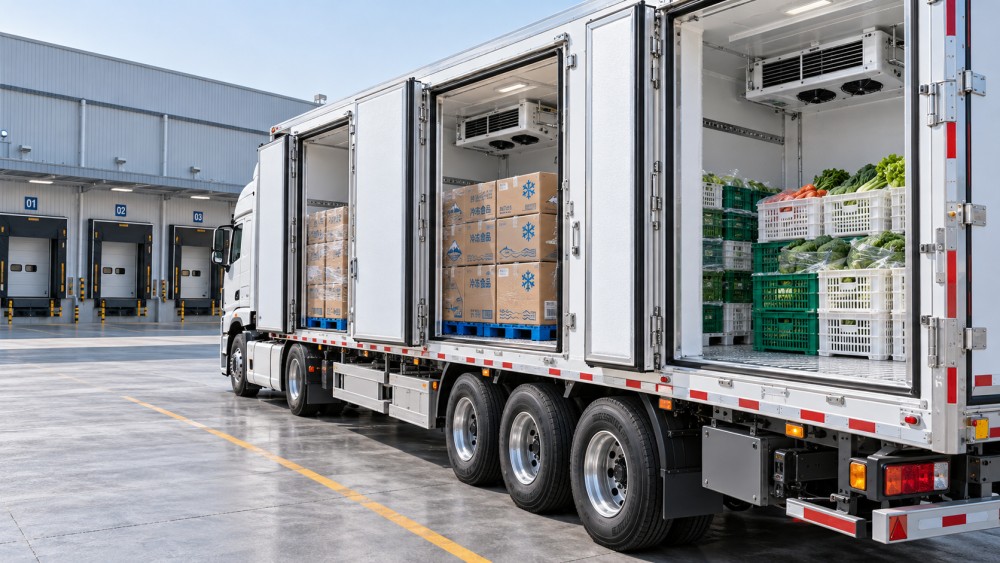
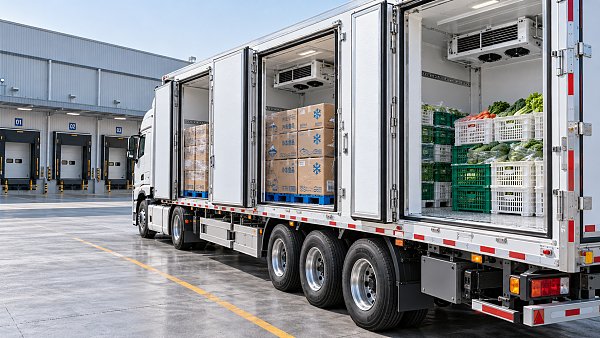
Multi-temperature refrigerated trailers typically separate frozen, chilled, and other temperature-sensitive products using insulated partitions. Layout selection should follow shipment profiles, unloading sequences, and seasonal demand.
Fixed compartments provide consistent loading boundaries and can simplify procedures. However, their allocated space may become restrictive when frozen and chilled volumes change between routes.
Movable bulkheads offer flexibility, but their value depends on sealing quality, adjustment effort, and secure positioning. Poorly fitted partitions allow unwanted heat transfer between zones.
Longitudinal divisions can support separate access along the trailer, while transverse compartments divide its length. Both arrangements affect pallet placement, airflow, unloading access, and available dimensions.
Assess whether drivers can reach each order without moving unrelated products or exposing another temperature zone. Excessive handling can undermine the benefits of additional compartments.
Specify approved partition positions and the temperature capability of each resulting compartment. Flexible layouts still need defined operating limits, especially when one zone becomes unusually small.
Define the Delivery Duty Before Requesting Quotations
Give every shortlisted supplier the same operating brief. Without common assumptions, apparently comparable offers may describe equipment designed for substantially different routes and service expectations.
Document product temperature requirements, dispatch temperatures, typical shipment volumes, maximum ambient conditions, route duration, stop frequency, and expected door-open time. Include demanding seasonal operating conditions.
Distinguish product temperature from air temperature. A brief air-temperature rise after unloading does not automatically mean the food has exceeded its permitted product temperature.
Conversely, an acceptable sensor reading cannot prove every pallet remains compliant. Loading patterns, blocked airflow, and sensor placement can hide local problems within a compartment.
Record depot practices as well, including trailer precooling, loading-bay conditions, standby power availability, and turnaround time. These factors influence both required equipment and daily energy consumption.
For replacement purchases, use existing route records to identify recurring problems. Temperature excursions, damaged partitions, delayed unloading, and payload restrictions provide better evidence than general preferences.
Will Refrigeration Capacity Hold Up During Frequent Deliveries?
A multi-temperature refrigeration system must manage different loads across several zones. Total advertised capacity does not establish whether each compartment can meet its individual requirement.
Ask suppliers for available capacity at your specified ambient and compartment temperatures. Compare figures only when rating conditions, operating modes, and measurement methods are consistent.
Confirm how capacity is distributed when several evaporators demand cooling simultaneously. One zone recovering after a delivery may affect the cooling available elsewhere in the trailer.
Door openings introduce warm, moist air, increasing cooling demand and potentially accelerating frost accumulation. Frequent urban stops can therefore challenge equipment differently from uninterrupted highway journeys.
Request an explanation of defrost scheduling, temperature recovery, and any heating capability required for sensitive products. These functions should support the complete route across relevant seasons.
Transport refrigeration generally maintains correctly prepared loads; it should not be assumed to cool warm food rapidly. Agree acceptable loading temperatures and investigate exceptions separately.
If a supplier proposes a larger unit, ask which calculated load requires it. Additional capacity should address documented demand without creating avoidable weight, cost, or maintenance.
Evaluate Insulation and Airflow as One System
Insulation reduces heat entering the body, while airflow distributes cooling around the load. Weakness in either can produce temperature variation despite adequate nominal refrigeration capacity.
Compare declared body insulation performance using equivalent test conditions. Panel thickness alone is insufficient because materials, joints, doors, floors, and thermal bridges all affect heat transfer.
Inspect door seals, bulkhead edges, floor joints, and drainage details. Ask how repairs restore thermal performance after impact damage, water ingress, or deterioration during service.
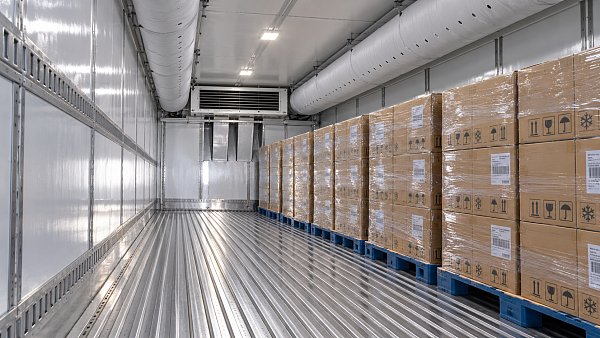
Air chutes, evaporator positions, return-air paths, and floor channels must suit actual cargo. Pallet height and packaging can obstruct circulation even when loading remains within weight limits.
Require a loading diagram showing clearances around evaporators and return-air openings. Check whether those clearances reduce the usable pallet positions quoted in the commercial offer.
Discuss strip curtains, insulated access doors, and other measures for reducing air exchange. Assess their effect on unloading speed, cleaning, visibility, and driver compliance before selection.
How Much Saleable Payload Remains After Specification?
Additional evaporators, partitions, batteries, insulation, and handling equipment increase empty weight. Procurement comparisons should use the complete proposed configuration rather than an unrepresentative base trailer.
Request a weight breakdown and clarify whether stated mass includes fluids, standby equipment, spare wheels, bulkheads, and other options. Define an acceptable delivered-weight tolerance contractually.
Calculate useful payload within applicable gross combination, trailer, and axle limits. The result depends on the tractor, coupling position, load distribution, and country of operation.
Multi-drop unloading changes weight distribution throughout a route. Check intermediate loading states, because a combination that departs legally may encounter axle-loading problems after selected deliveries.
Confirm internal dimensions, door openings, floor loading limits, and compatibility with pallet trucks or forklifts. Tail lifts also affect rear loading, empty weight, and maintenance requirements.
Match coupling height, fifth-wheel capacity, electrical connections, braking systems, and clearance envelopes to the intended tractor fleet. Obtain approval for combinations involving unusual dimensions or equipment.
Ask Suppliers to Prove Performance on a Representative Route
A specification review identifies design suitability, but an agreed acceptance trial tests the complete system. Define the procedure before placing the order and settling commercial terms.
Use representative cargo or a documented equivalent, realistic partition positions, and the planned delivery sequence. Record ambient conditions so results can be interpreted against the design brief.
Place calibrated temperature loggers at agreed locations across compartments, including likely problem areas. Unit display readings alone provide limited evidence of temperature distribution around the load.
Agree what constitutes acceptable recovery after door openings, how defrost periods are assessed, and which product-specific limits apply. Avoid treating every temporary air fluctuation identically.
Measure refrigeration energy use, unloading time, and operational difficulties alongside temperature performance. A trial should reveal whether drivers can consistently follow the required loading and access procedures.
If testing occurs in mild weather, establish how performance under the specified design extremes will be demonstrated. Record assumptions, limitations, remedies, and retesting responsibilities explicitly.
Compare Lifetime Cost Using the Same Commercial Assumptions
Purchase price is only one component of ownership cost. Compare offers over the same service period, annual distance, refrigeration hours, delivery pattern, and residual-value assumptions.
Include refrigeration fuel or electricity, scheduled servicing, expected repairs, tyres, inspections, monitoring subscriptions, and downtime. Distinguish included warranty coverage from costs the operator must absorb.
Translate weight differences into business consequences where payload limits regularly constrain deliveries. Additional trips or lost carrying capacity can outweigh a modest saving on the trailer.
Assess service coverage along operating routes, replacement-unit availability, parts lead times, and technician capability. A warranty offers limited operational protection when repair support is difficult to access.
Electric and hybrid refrigeration options require a route-specific energy assessment. Examine charging access, usable battery capacity, standby arrangements, and performance during extended deliveries or unexpected delays.
Run sensitivity checks for energy prices, utilisation, and downtime. This shows whether an apparently cheaper offer remains attractive when the assumptions most likely to change move.
Put Compliance, Hygiene, and Support Into the Contract
Requirements differ by country, transport operation, and food category. Identify the applicable vehicle, food-hygiene, temperature-control, and refrigerant obligations before agreeing the final equipment specification.
For relevant international carriage of perishable foodstuffs, check whether ATP requirements apply. Verify that certification covers the proposed configuration, required temperature class, and intended operating conditions.
Require suppliers to identify the jurisdiction, configuration, and effective date behind compliance claims. A general statement that equipment meets European or international rules is insufficient.
Inspect cleanability, drainage, surface durability, and access around evaporators and partitions. Temperature separation alone does not resolve cross-contamination risks between incompatible food products or damaged packages.
Specify the refrigerant, service requirements, and any restrictions relevant to the purchase market. Ask how future servicing availability and component replacement could affect expected ownership costs.
Include driver training, loading instructions, maintenance documentation, monitoring access, warranty exclusions, and acceptance remedies in the agreement. Confirm ownership and exportability of recorded operational data.
Make the Final Decision Around Verified Route Suitability
Choose refrigerated trailers by first confirming temperature performance, legal payload, and practical unloading on the intended routes. Then compare lifetime costs among configurations meeting those requirements.
A strong purchasing decision connects every major option to a measurable need: product protection, delivery access, carrying capacity, service availability, or a credible reduction in operating expenditure.
Before signing, obtain the final configuration drawing, weight statement, performance evidence, acceptance criteria, and support commitments. Together, these documents turn supplier promises into reviewable purchasing requirements.